
Content coming soon!
Background
[Context/Importance]……. ……….. ……. ………………. ………….. …… …… …………….. ……………….. ………….. ………………
Our Research
[Our Research]……. ……….. ……. ………………. ………….. …… …… …………….. ……………….. ………….. …………….
Related Projects
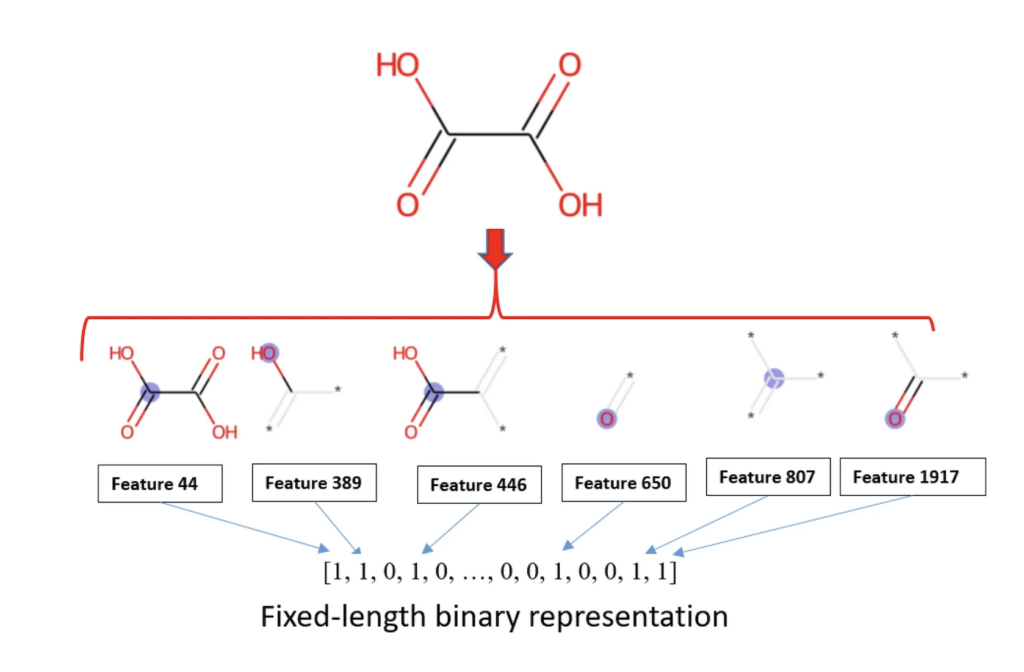
In this study, two different ML methods were developed to accurately predict the solubility of various species using data from over 8400 compounds. Molecular descriptors, commonly used in previous studies, and Morgan fingerprints, circular-based hashes of molecules’ structures, were applied to generate water solubility estimates. The significance of this study lies in the practical utility of the developed fingerprint model, which can assist experts in investigating the impact of different functional groups on solubility predictions. This has important implications for drug discovery and other related applications.
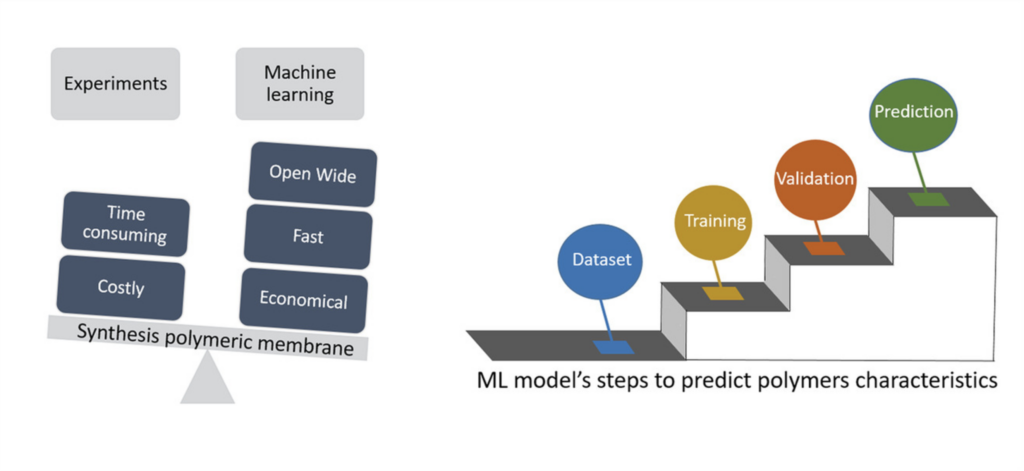
This study explored the potential of using machine learning (ML) to graft an RO membrane’s polyamide (PA) surface, aiming to increase water permeability and overcome the permeability/selectivity tradeoff limitations. Moieties with positive and negative contributions toward water permeability were identified using Shapley-Additive-explanations (SHAP) analysis as an explainable artificial intelligence (XAI) method. By improving the subunits of the PA’s structure with positive Shapley values, the polyamide RO membrane layer of a commercial membrane, Dupont XLE, experienced a substantial increase in water permeability. A path from A to Z that demonstrates incorporating ML algorithms into membrane fabrication processes can be found in our published study.